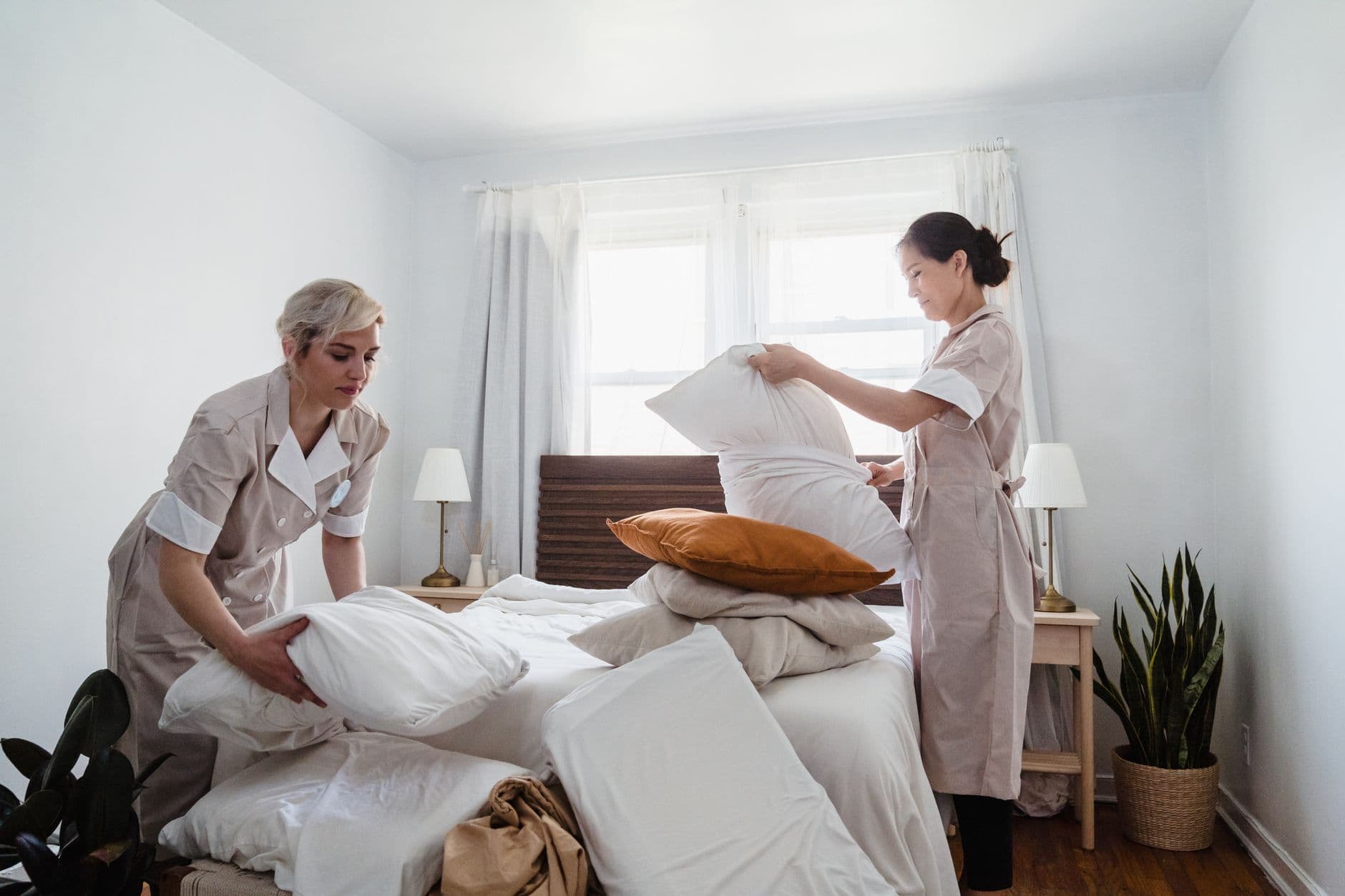
Every host needs an Airbnb cleaning checklist for one unglamorous reason: memory fails on turnover day. Not on the first one — on the forty-first, when checkout is at 11, check-in is at 3, and the laundry is still spinning. Cleanliness is its own rating category on Airbnb, guests judge it in the first ninety seconds, and a single stray hair in the bathroom can cost you a star that takes months to earn back. The fix isn't heroic effort. It's a system you run identically every time, whether it's you cleaning or someone you've hired.
Why a checklist beats a good cleaner
A great cleaner without a checklist gives you a clean home that looks slightly different every week. A checklist gives you the same product every time — and consistency, not sparkle, is what protects ratings.
Guests don't compare your place to a hotel; they compare it to your photos and your last guest's review. When the fifth guest finds the same folded towels, the same stocked coffee, the same staged living room as the first, your cleanliness score stops being luck.
There's also an official baseline: Airbnb requires all hosts to follow its five-step enhanced cleaning process — prepare, clean, sanitize, check, and reset. Those five verbs happen to be an excellent skeleton for a turnover system, so that's how this checklist is organized.
The turnover in five phases
1. Prepare (before you touch anything). Air out the space, start the dishwasher if the guest didn't, and strip every bed — then get the first laundry load running immediately.
Laundry is your critical path: on a same-day turnover, everything else happens while the machines work. This is also your damage-scan moment: walk every room before cleaning erases the evidence. If something's broken or missing, photograph it now — our guide on handling guest damage covers what to do next, and the documentation window is short.
2. Clean. Dust and dirt first, always top to bottom: surfaces, then furniture, then floors. Sweep or vacuum before you mop, and leave floors for last in each room so you're not walking over your own work.
3. Sanitize. Hit the high-touch surfaces guests actually touch but cleaners often skim: door handles, light switches, remote controls, lockbox or keypad, fridge and microwave handles, faucets, toilet flush. Let disinfectant sit for the dwell time on the label instead of spraying and immediately wiping — that's the step most people unknowingly skip.
4. Check. Walk the space room by room against the checklist below — as a guest, starting at the front door. Turn on every light, run every faucet, test the Wi-Fi, open the fridge. This is where you catch the burned-out bulb and the previous guest's phone charger.
5. Reset. Remake beds, restage furniture to match your listing photos exactly, restock consumables, set the thermostat, and lock up. Your photos are a contract; the reset phase is how you keep it.
Room-by-room checklist
Bedroom:
- Strip and remake beds with fresh linens; check the mattress protector for stains
- Check under the bed and inside every drawer and closet for left-behind items
- Dust nightstands, headboard, lamps; wipe switches and handles
- Vacuum, including under the bed edges
Bathroom:
- Scrub toilet (including base and behind), shower, tub, and sink; clear the drain of hair
- Polish mirror and fixtures — water spots read as "dirty" even when everything is sanitized
- Replace all towels; restock toilet paper, hand soap, shampoo and conditioner
- Empty the trash and wipe the bin itself; wash the bath mat on a schedule, not "when it looks bad"
Kitchen:
- Wash, dry, and put away all dishes; run the dishwasher empty with cleaner monthly
- Wipe counters, backsplash, cabinet fronts, and appliance exteriors
- Check inside the fridge, microwave, and oven — remove every trace of the previous guest's food
- Restock coffee, tea, oil, salt and pepper, sponge, dish soap, trash bags
Living room and entry:
- Fluff and restage cushions and throws to match listing photos; fold blankets the same way every time
- Wipe the dining table, coffee table, and remote controls; check between sofa cushions
- Test TV, Wi-Fi, and any smart devices; put chargers and adapters back where the house guide says they are
- Sweep the entry, shake the doormat, wipe the door handle and keypad
Whole home, last pass: trash out, windows locked, thermostat set, all lights off, door locked behind you.
The time budget: what a turnover really takes
Here's a realistic budget for a one-bedroom, one-bath listing, assuming a normal checkout (not a disaster):
| Phase | Tasks | Time |
|---|---|---|
| Prepare | Air out, strip beds, laundry load 1, damage scan | 20 min |
| Bathroom | Full scrub, restock, towel swap | 25 min |
| Kitchen | Dishes, surfaces, fridge check, restock | 30 min |
| Bedroom | Remake beds, dust, drawers, vacuum | 20 min |
| Living/entry | Restage, wipe, tech check | 15 min |
| Floors, whole home | Vacuum and mop, all rooms | 20 min |
| Check + reset | Walkthrough, restock, staging, thermostat | 20 min |
That's roughly two and a half hours of labor — before travel time, and assuming laundry runs in parallel. Add 30–45 minutes per additional bedroom and bathroom. If those numbers surprise you, that's the point: hosts who budget "an hour or so" are the ones cutting the check phase when a same-day turnover gets tight, and the check phase is where reviews are saved.
The restocking list and par levels
Stockouts, not stains, cause some of the worst turnover-day scrambles. Borrow the restaurant concept of a par level: for each consumable, the minimum quantity that must be in the unit at check-in.
Restock to par every turnover, and keep a locked owner's closet with backup stock so a missing item never requires a store run.
- Toilet paper: 2 rolls per bathroom in place, 6 in reserve
- Paper towels: 1 roll out, 2 in reserve
- Trash bags: 4 per bin size
- Hand soap, dish soap, sponge: 1 each open, 1 backup
- Shampoo, conditioner, body wash: full at check-in, backups in the closet
- Coffee, tea, sugar: enough for two mornings for your max guest count
- Linens and towels: three full sets per bed and per guest — one on, one in the wash, one on the shelf
That third linen set is the cheapest insurance in hosting: it's what makes a same-day turnover survivable when a comforter comes out of the dryer damp.
Do it yourself or hire it out: the actual math
In the U.S., independent turnover cleaners and services typically charge in the range of $25–$65 per hour, with around $30 as a common midpoint. At 2.5 hours, a one-bedroom turnover runs about $75–$90; a typical flat rate for the same job lands in the same zone. At 10 turnovers a month, that's roughly $750–$900.
Whether that's expensive depends on what your own hours are worth — and on your cleaning fee. U.S. guests commonly pay somewhere in the $75–$150 range per stay, with market averages around $102 for one-bedroom and $156 for two-bedroom listings. In other words, a sensibly set cleaning fee can cover a hired professional more or less dollar for dollar. Two caveats. First, Airbnb's host service fee is charged on your whole subtotal including the cleaning fee, so a fee that covers your cleaner still hands the platform its percentage — the pass-through isn't quite 100%, and it's one of the levers in reducing what Airbnb fees cost you. Second, an oversized cleaning fee inflates the guest's total and hurts conversion on short stays, which is a pricing problem as much as a cleaning one — see how to price your Airbnb for how the pieces fit together.
The practical rule most hosts land on: DIY while you're learning the property and writing the checklist, then hire once volume passes the point where turnover days collide with your actual life. When you do hire, hand over this checklist with photos of correct staging for every room, and pay for the check phase, not just the cleaning. You're not buying hours; you're buying your rating.
Where turnovers go wrong
Most blown turnovers come down to sequence rather than speed — laundry started too late, or a damage scan skipped until the evidence has already been cleaned away.
- Starting laundry late. It's the longest task; it goes first, always.
- Skipping the pre-clean damage scan. Once you've cleaned, your evidence is gone.
- Cleaning without staging. Guests don't review "sanitized"; they review "looked like the photos."
- No reserve stock on site. Every stockout becomes a store run on the busiest day.
- Treating the walkthrough as optional. The check phase costs 15 minutes and saves more reviews than any other line on this list.