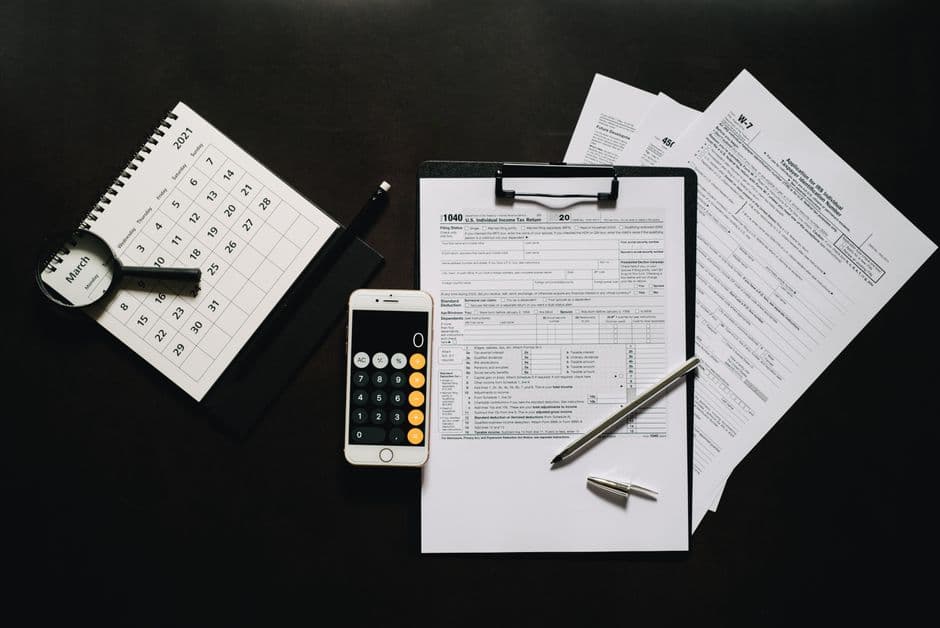
Airbnb taxes confuse more US hosts than pricing, cleaning, and difficult guests combined — and the rules moved again recently, so even hosts who had it figured out are second-guessing. Three questions decide most of your situation: Will I get a 1099-K? Does my income go on Schedule E or Schedule C? And does the 14-day rule apply to me? Get those three right and the rest is mostly bookkeeping.
First, the necessary caveat, and it's not boilerplate: this is general information, not tax advice. Short-term rental taxation depends on facts specific to you — days rented, services offered, personal use, your state. Before you file, run your situation past a CPA or enrolled agent who knows short-term rentals.
The 1099-K: back to $20,000 and 200 transactions
The 1099-K is the information form Airbnb (like other payment platforms) files with the IRS reporting the gross payments it processed for you.
Its threshold has been a moving target for years — Congress passed a $600 threshold in 2021, the IRS delayed it repeatedly, and phase-in numbers like $5,000 and $2,500 floated around. That whiplash is over: legislation signed in July 2025 retroactively restored the original threshold, and the IRS confirmed it in October 2025. A platform is required to file a 1099-K only when your gross payments exceed $20,000 and your transaction count exceeds 200 in a calendar year.
Three practical consequences:
- Fewer hosts will receive the form. A host with $18,000 across 60 bookings is under both prongs — no federal 1099-K requirement.
- No form does not mean no tax. This is the trap. Rental income is taxable whether or not any form is issued. The 1099-K changes what the IRS is told automatically, not what you owe.
- Some states still require reporting at much lower thresholds — several use figures like $600 or $1,000 — so you may receive a state-driven 1099-K even under the federal limit.
One more wrinkle that catches first-time filers: the 1099-K reports gross earnings — the full reservation amounts before Airbnb's host service fees, refunds, and adjustments come out. The number on the form will be larger than what hit your bank account. You don't pay tax on the inflated figure; you report the gross and then deduct the fees. Speaking of which, if you've never actually added up what the platform takes, our breakdown of Airbnb host fees is a useful companion to your tax prep.
The 14-day rule: the rare genuinely free lunch
Buried in IRS Topic 415 is one of the friendliest rules in the tax code: if you use a dwelling as a residence and rent it out for fewer than 15 days during the year, you don't report the rental income at all. Not at a reduced rate — at all.
Rent your home for two weeks during a major event in your city at $800 a night and the roughly $11,000 is yours, federally tax-free.
The mirror image: you also can't deduct any rental expenses for those days. And the boundaries are strict — the count is per dwelling per year across all platforms combined, and hitting 15 rented days flips you into the normal regime for the entire year, income and expenses alike. Hosts near the line should count days as carefully as they count towels.
Schedule E vs Schedule C: the substantial-services test
Assuming you're past 14 days, your income lands on one of two forms, and the difference is real money.
Schedule E (Supplemental Income) is the default for rental income. You report rents, deduct expenses, and — critically — the net profit is not subject to self-employment tax.
Schedule C (Profit or Loss From Business) applies when you're not just renting space but running something closer to a hotel. IRS Publication 527 draws the line at substantial services provided primarily for the guest's convenience: regular cleaning during the stay, changing linens mid-stay, maid service, meals, concierge-style extras. Cross that line and your net profit picks up self-employment tax of 15.3% on top of income tax.
What does not count as substantial services matters just as much: cleaning between guests, providing utilities, maintaining common areas, and repairs are all normal rental activity. A typical self-check-in Airbnb — guest arrives, stays, leaves, cleaner turns the unit over — sits comfortably on Schedule E.
| Schedule E | Schedule C | |
|---|---|---|
| Typical setup | Standard STR: turnover cleaning only, no mid-stay services | Hotel-like: daily housekeeping, meals, guest services |
| Self-employment tax (15.3%) | No | Yes |
| On $10,000 net profit | Income tax only | Income tax + roughly $1,413 SE tax ($10,000 × 92.35% × 15.3%) |
| Losses | Often limited by passive activity rules | Generally deductible against other income if you materially participate |
That $1,413 difference on a modest profit is why "which schedule" isn't a formality. It's also why you shouldn't game it in either direction: putting a breakfast-and-daily-cleaning operation on Schedule E invites an audit adjustment, while parking a plain rental on Schedule C pays self-employment tax nobody asked you to pay. Match the form to the facts — and if your facts are genuinely mixed (average stays under a week, some services), that's exactly the situation to bring to a professional, because average stay length and material participation open a separate set of rules that can cut both ways.
The deductions that do the heavy lifting
Whichever schedule applies, your taxable profit is gross income minus ordinary and necessary expenses. For a typical host that includes:
- Platform service fees — the host fees deducted from every payout (remember, the 1099-K reports amounts before these come out; strategies for keeping fees down help here too)
- Cleaning and turnover costs, laundry, consumable supplies
- Insurance premiums — including short-term-rental coverage, which, as we've covered in what AirCover doesn't cover, most hosts should be carrying anyway
- Mortgage interest and property taxes, allocated to rental use
- Utilities, internet, streaming subscriptions guests use
- Repairs (deducted now) versus improvements (depreciated over time)
- Depreciation on the building and furnishings — often the largest deduction hosts overlook
If the property doubles as your vacation home, expenses get prorated between rental and personal days, and using it personally more than the greater of 14 days or 10% of rented days limits how far deductions can go. This proration math is precisely where software shortcuts and guesswork fall apart — keep a calendar.
Don't confuse income tax with occupancy tax
Everything above is federal income tax. Separately, most US jurisdictions charge lodging or occupancy taxes on short stays.
Airbnb collects and remits these automatically in many locations, but not all, and automatic collection doesn't always cover every local layer or replace a required local registration. Check your city and county rules directly — a state platform agreement doesn't necessarily satisfy a municipal permit requirement.
The record-keeping habit that makes April boring
Hosts who suffer in filing season are reconstructing; hosts who don't are exporting.
Keep, from day one: the platform's annual earnings report, a booking calendar distinguishing rental, personal, and vacant days, receipts for every expense, mileage logs for property trips, and photos plus receipts for furnishings (that's your depreciation basis). Thirty minutes a month beats thirty hours in April.
Five mistakes that cost real money
The expensive mistakes here aren't exotic ones. They start with assuming that income no platform reported is income you don't owe tax on.
- Assuming no 1099-K means tax-free income. The threshold reverted to $20,000/200, which means more income goes unreported by platforms — but not untaxed. Underreporting risks penalties and interest later.
- Reporting the bank-deposit number instead of gross. If a 1099-K exists, the IRS matches against the gross figure. Report gross, deduct fees; don't net them invisibly.
- Ignoring depreciation — leaving thousands in deductions unclaimed, and the IRS assumes you took it anyway when you sell.
- Blowing the 14-day count by forgetting that platforms combine — 10 nights on one site and 6 on another is 16 days.
- Filing the wrong schedule and either overpaying 15.3% or explaining your daily-breakfast service to an auditor.
Rental income has a way of feeling like found money in year one and like a compliance project in year two. It doesn't have to be either: know your form, know your schedule, keep the calendar, and hand the genuinely gray areas — mixed personal use, short average stays, substantial services — to a professional who answers those questions for a living. Once your filing is under control, direct earnings from your own booking site follow the same playbook: same schedules, same deductions, and payment processors follow the same 1099-K rules.